
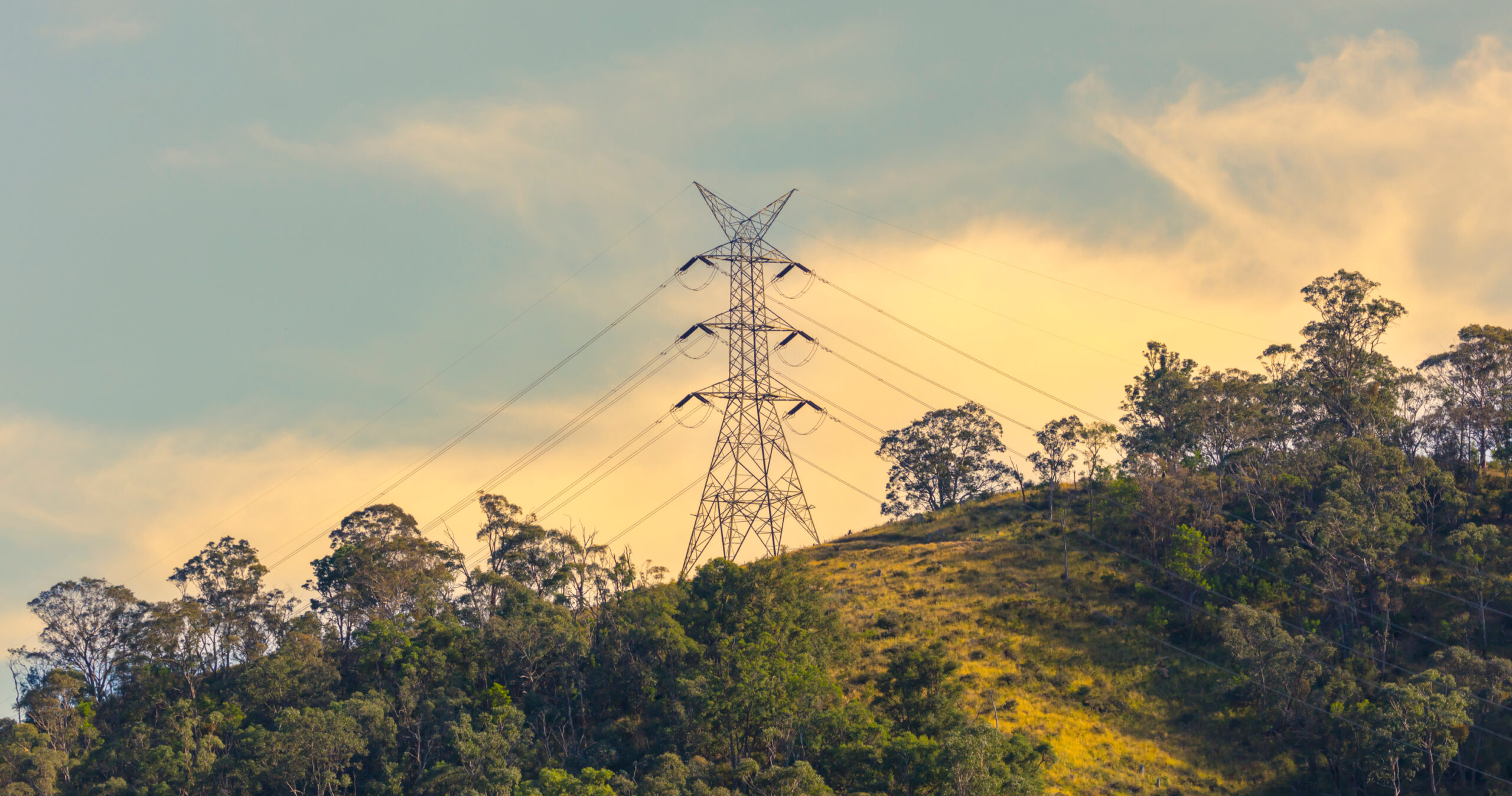
On 19 August 2026, the Victorian Liberal-National Coalition announced, that if elected at the November 2026 Victorian election, it would cancel the Victoria to New South Wales Interconnector West (VNI West) transmission project outright. This represented a significant shift from its previous position, which had been to pause and review the project.
We take a look at what this means for the NEM, with a particular focus on the Integrated System Plan (ISP) and how the ISP responds to external “shocks”, whether they be policy, cost, or delivery timeframes. We think more extensive scenario analysis should be a feature of future ISPs, with the AEMC’s ISP Review well timed to build a more resilient ISP.
The challenge to building and paying for new transmission lines
VNI West is not the first transmission project that an incoming government has considered scrapping, and it won’t be the last. The political challenge for transmission companies is that these projects take a long time to come to fruition, and often come at a higher cost than they were originally estimated. Transgrid’s Project Energy Connect was first approved at a cost to consumers of $2.28B, but is currently running to more than $4B. VNI West itself was originally costed at $3.9B, before AEMO estimates increased, with the project in 2025 scheduled to cost at least $7.6B. The development phase can often span multiple governments, creating an opportunity for new decision makers to make calls on whether lines still make sense as a part of their revised energy vision.
The AEC’s Energy2050 vision sets out its views on what is required to ensure the transmission system is fit for purpose to deliver a net zero energy system. Transmission infrastructure should be scoped and sized to meet the defined needs of the energy system on a NEM-wide basis and come at least cost to consumers. There should be an established process to assess which projects make the most cost-effective contribution to energy system reliability, with project timing prioritised accordingly. Timely transmission delivery is a critical enabler of achieving our Energy2050 vision, but not at any cost. There needs to be strong incentives for managing costs and avoiding delay as it is evident that when critical transmission is delayed, there is upward pressure on wholesale prices, ultimately increasing bills for energy consumers.
By 2050, the transmission network will connect renewable energy to consumers, bringing low-cost electrons to heavy industry, businesses, and households. But it is not the only option. Where costs are too high, or social licence challenges are unable to be resolved, there are opportunities to better leverage the distribution network, or through new generation to mitigate higher wholesale costs resulting from a lack of necessary transmission.
The question is, how can stakeholders consider the relative merits of a new transmission line alongside the objective of a least cost system?
If VNI West is cancelled by a newly elected Victorian Government, what happens next?
If a newly elected Victorian Government legislates against VNI West, refuses planning approvals, or otherwise prevents delivery, AEMO would recognise that reality in its future ISP planning assumptions. However, given the 2026 ISP was only published in June 2026, and ISPs are produced on a two-year cycle, there would likely be an extended period of uncertainty on what an alternate Optimal Development Path (ODP) would look like, and what it would cost relative to an ODP with VNI West still included. It may be the case that AEMO provides a view in the interim through other reports.
Whether the ODP takes another two years to release or AEMO releases interim guidance, the ODP will need to be re-optimised for the revised policy environment. This would likely examine what additional Victorian storage, firming and gas would be required, whether alternative transmission augmentations could deliver net market benefits, and explore whether existing transmission utilisation rates could be enhanced.
What is the least-cost replacement portfolio?
The short answer is we don’t know. There is no published least cost replacement portfolio for VNI West. AEMO does not produce ODP sensitivities in the ISP that exclude projects.
We do know directionally though that the energy system without VNI West would likely require more Victorian generation and storage, with gas playing a greater role than previously anticipated. This additional generation, storage and gas would need to be located within Victoria, and would likely need additional transmission within Victoria to get it to Melbourne and major load centres.
Cancellation would not necessarily mean “no new transmission.” Additional Victorian renewables and storage would still need connections, and the existing network might require:
- upgrades into Melbourne;
- reinforcement within western and northern Victoria;
- REZ connection works;
- potentially smaller or staged interstate augmentations;
- grid-forming equipment, synchronous condensers and other system-strength investments.
Whether this portfolio costs less than the current $7.6 billion central estimate for VNI West (or the upper estimate of $11.4 billion) can’t be gleaned from publicly available information. A proper counter factual would need to include the savings from cancellation, but also the additional costs associated with replacement generation, storage, and local transmission upgrades.
In a report released today, Endgame Analytics modelled a re-optimised case which took VNI West out, and added in the required incremental generation, storage and firming, subject to their usual build limits and connection constraints. They find Victorian wholesale prices are $20 per MWh higher from 2036, and that this persists over the long term. The conclusion is removing the capital cost of VNI West implicitly involves accepting a permanently more expensive system unless another cheaper piece of infrastructure replaces it.
Timing matters here as well. A number of reports have highlighted that delays to transmission delivery can induce higher wholesale energy costs than would otherwise be the case, and to the extent the replacement generation and storage cannot be built ahead of coal closure, we could reasonably expect wholesale price impacts.
So what should we do differently?
The current debate is largely occurring because stakeholders do not have an agreed answer to “if VNI West is cancelled, what replaces it and at what cost?”
The AEC has consistently argued for greater use of sensitivity analysis in the ISP. If the ISP routinely included key sensitivities, we would have an answer to this key question now. Crucially, the Victorian Opposition would have that analysis available to help make the policy decision it has arrived at.
We have frequently argued that the ISP should be seen as a decision support tool rather than a single, deterministic blueprint. Major uncertainties include transmission costs, coal closure timing, gas availability, data centre demand, electrification rates, social licence constraints, and state government policy changes. VNI West is the exemplar of a state government policy change – a state election could change a foundational assumption underpinning the ISP.
The VNI West debate demonstrates the value of a more scenario-based ISP. While the 2026 ISP identifies VNI West as part of the least-cost development path, it does not provide stakeholders with a transparent, optimised alternative if the project does not proceed. More extensive scenario analysis, including cancellation or prolonged delay of major transmission projects, would improve investment certainty, strengthen policy resilience, and allow governments and market participants to make decisions with a clearer understanding of the trade-offs between transmission, generation, storage and fuel supply options.
In addition to more extensive scenario analysis, we believe the ISP modelling should be opened up to external stakeholders. The AEMC should consider how AEMO could do more to facilitate the development of an open source, independently reproduceable ISP model, with all underlying data and assumptions available. This would enable researchers, policy makers and market participants to create their own scenarios, recognising the central role the ISP plays in the NEM.
