
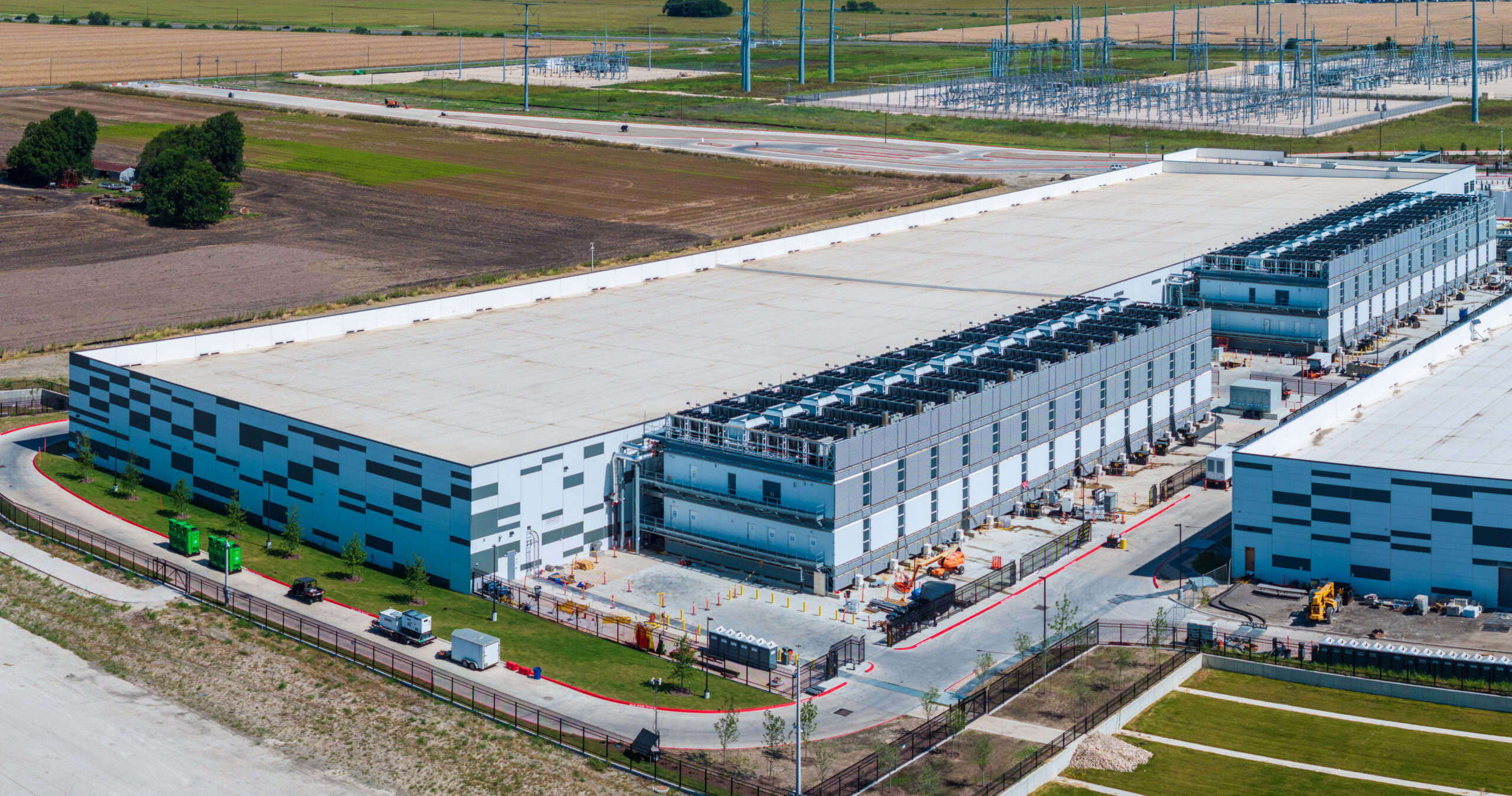
Australia’s data centre boom is creating a new challenge for the energy system. Demand for computing power is growing rapidly as artificial intelligence, cloud computing and digital services expand, but these are not ordinary electricity customers. A single large data centre can require hundreds of megawatts of capacity and operate around the clock.
Following the Federal Government’s announcement of its AI Standards, the NSW Government’s new Data Centre Policy Framework is a further attempt to make sure data centre demand supports rather than disrupts the energy transition. NSW already has more than 60 data centres operating or under construction, with another 19 projects worth $50.3 billion in the State Significant Development pipeline.[i] At the same time, the state is preparing for around 7 GW of coal-fired generation to retire and needs to build new renewable generation, storage and transmission to replace it.
The premise then of the NSW policy is straightforward: if data centres want to connect to the grid, they must contribute to the energy infrastructure they require.
Making new demand pay its way
The most significant part of the framework is the requirement for data centres to support additional renewable energy supply. Projects will need to enter into power purchasing agreements and firming arrangements linked to new renewable generation in NSW. The framework requires at least 40 per cent of contracted generation to come from wind, alongside storage equivalent to at least 25 per cent of the generation capacity for four hours. The contracts must be long term and, the definition of “new” is renewable projects that have not yet reached final investment decision.
That distinction matters. There is a big difference between a data centre buying renewable energy certificates from an existing wind or solar farm and helping provide the revenue certainty needed to build a new one. The NSW Government is effectively trying to make data centre demand part of the investment case for new, renewable generation. At a time when Australia needs to bring on large amounts of renewable generation but is facing questions about whether enough projects are reaching financial close quickly enough, that requirement could be crucial.
The emphasis on wind and storage is also significant. NSW already has enormous amounts of solar generation, including millions of rooftop systems, but the system increasingly needs reliable firming generation when solar output falls. New wind generation and storage is an important part of the technology mix needed for coal generation to retire. If large data centres can provide long-term contracts for that new supply, they could become an additional source of investment certainty for projects that otherwise may struggle to get over the line.
The framework also recognises that the timing of electricity consumption matters, not just the total amount. Data centres must be capable of reducing their grid demand by 25 per cent of their forecast average load for up to two hours.[ii] That could involve shifting computing workloads, reducing non-essential electricity use, or using batteries and other storage. This requirement is partly designed to stimulate investment in low emissions demand management technology (e.g. batteries, Virtual Power Plants) and consequently does not allow back-up diesel generation to be used.
This starts to treat data centres as something more than a very large, inflexible electricity load. If computing tasks can be temporarily throttled or shifted to another time, a data centre could potentially provide a degree of flexibility to the grid. This becomes more important as renewable generation grows and the system needs greater flexibility to balance supply and demand.
The network problem
The other challenge is where all this new electricity demand is going to connect. Data centres are attractive to developers because they can be built quickly once a site and power connection are secured, but the electricity network cannot expand at the same speed. Transgrid has been dealing with an unprecedented volume of data centre connection inquiries in NSW, with around 8 GW of potential supply in its pipeline, roughly equivalent to the state’s average electricity demand at some points of the day.[iii]
Not all of those projects will be built. The NSW framework estimates that as much as six in every seven megawatts of data centre connection requests could represent so-called phantom demand which creates a problem for network planners. If a developer asks for hundreds of megawatts of capacity, the network has to consider what infrastructure would be required to accommodate it. But if the project never materialises, other customers can ultimately be left paying for infrastructure that is not fully used.
The new framework is intended to reduce that risk by making developers contribute to the additional energy and network infrastructure their projects require. The location of a data centre will matter too. Projects outside the Sydney Ring are expected to face lower contribution requirements in some circumstances because they may require less upstream network investment. That could influence where new facilities are built and, in turn, help spread demand beyond parts of western Sydney where the electricity network is already under pressure.
But there is a limit to how much this can solve. Building a data centre near renewable generation does not remove the need for transmission, and a power purchase agreement does not mean a facility is physically supplied by that particular wind or solar farm. The electricity system still needs enough generation, storage and network capacity to keep the system reliable when demand is high and renewable output is low.
A new source of demand, or a new source of investment?
This is what makes the data centre boom unusual from an energy perspective.
Normally, rising electricity demand is something energy planners simply have to accommodate. Data centres could instead become a source of investment that helps build some of the infrastructure needed to accommodate their demand.
Industry estimates suggest every additional gigawatt of data centre demand could require several gigawatts of new renewable generation to support 24/7 operations.[iv] If developers are prepared to sign long-term contracts for new wind, solar, and storage, they could help give investors the certainty needed to build those projects. That could be particularly valuable for wind, which has faced a tougher investment environment despite being an important part of the future electricity mix.
But it would be a mistake to assume the data centre boom automatically means more renewables. Data centres could just as easily compete with other customers for scarce network capacity, increase pressure on the grid and make it harder to manage the retirement of coal if new generation does not arrive quickly enough. The difference will come down to whether the new demand is matched by genuine new supply and whether the costs of accommodating it are properly allocated.
While NSW has jumped ahead in terms of having a jurisdictional policy, this is unlikely to remain a NSW issue.
AEMO expects data centre electricity consumption across Australia to grow rapidly, with demand forecast to reach around 12 per cent of grid-supplied electricity by 2040 under its Step Change scenario[v]. At that scale, data centres will increasingly feature in decisions about generation, transmission, reliability, and the pace of the energy transition.
The test will be implementation
NSW has set a clear principle: large new electricity users should help fund the infrastructure needed to support them. That is sensible in theory. The harder question will be whether the framework works in practice.
There remains a material time gap between the ease in which a data centre can be built and operational, versus a wind farm. The NSW policy does recognise this and says a data centre’s contracted energy supply must be equal to demand by its fourth year of operation.
The enforcement of that requirement invites a broader question about how much data centre demand Australia actually wants. Data centres can bring billions of dollars of investment, jobs and digital infrastructure and could help Australia establish itself as a regional hub for AI and computing. But they also consume enormous amounts of electricity and water.
Monitoring compliance will be important to avoid a future where Australia builds enormous amounts of computing capacity, only to discover that the electricity system has been left trying to catch up.
Data centres will continue to be a hot topic. How to sensibly navigate their energy requirements is a rapidly evolving space, with many questions still to be answered.
Given the high level of interest, the AEC is hosting a luncheon in Melbourne on 9th September that will further conversations about what is needed to smoothly bring data centres online. Tickets are now available and can be purchased here.
[i] https://www.energy.nsw.gov.au/news/nation-leading-framework-harness-nsw-data-centre-investment
[ii] https://www.infrastructure.nsw.gov.au/media/4jlictae/id0073_nsw-data-centre_guidelines.pdf
[iii] https://www.transgrid.com.au/media/c0hbf1gj/20260617-update-on-network-capacity.pdf
[iv] https://airtrunk.com/data-centres-can-power-investment-in-clean-grid-of-the-future
[v] https://www.aemo.com.au/newsroom/news-updates/aemos-updated-forecasting-methodology-targets-rapidly-growing-electricity-loads
